Community-Led Advocacy for Mental Health – Embu’s Mental Health Crisis Needs More Than Promises

Mental health is no longer missing from policy conversations in Embu County. It appears in county plans, sector priorities, and health discussions. But for many residents, that recognition has not yet translated into real access to care. Services remain concentrated in a few facilities, the specialist workforce is critically thin, and mental health support at primary health care level is still far from where it needs to be.
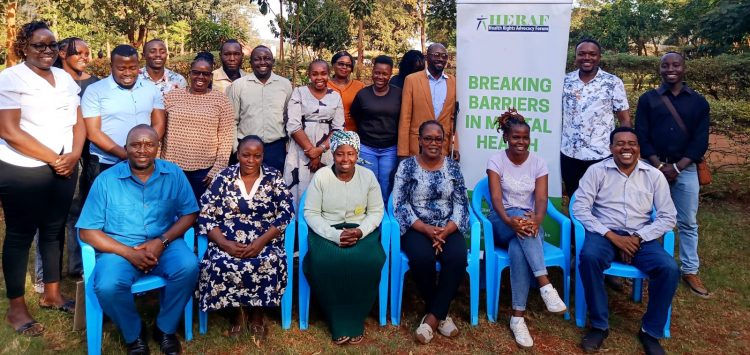
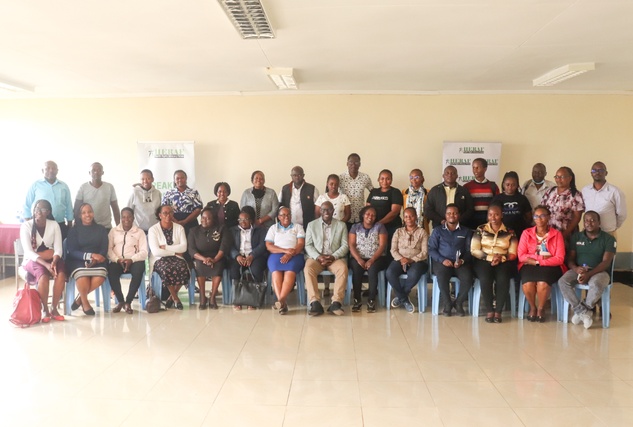
This gap between commitment and implementation was sharply brought into focus during a community-led advocacy forum held in Embu in January 2026. The forum brought together civil society actors, county officials, service providers, and community advocates to examine whether county investment in mental health is truly improving access to quality services.

Mental Health Services

In Embu County, specialized mental health care is primarily available at Embu County Referral Hospital, with Siakago Level 4 Hospital being the only other facility reported to have a mental health clinic. For a county with a projected population of 662,000 by the end of 2025, that is a dangerously narrow service base.


HRH by Cadre


No. available

Facility HRH Requirement – MOH,2014
  Level 5 Level 4
Psychiatrist 1 ECRH 4 2
Psychologist 2 ECRH at VCT & OPD 2 (clinical) 1
Psychiatric nurses 8 ECRH 20  
1 Siakago   6
Clinical Officer (psychiatry) 0   2 1

This shortage has direct consequences. It means delayed diagnosis, long referrals, limited follow-up, pressure on the referral hospital, and weak access for people living in underserved parts of the county. It also makes it harder to integrate mental health into routine services at lower-level facilities, where many cases could be identified and managed earlier.

What the data shows

Available county data points to substantial need for mental health services:

These figures matter because they show that mental health need is not isolated to one facility or one sub-county. Demand exists at both facility and community level. Yet gaps in data harmonization remain a major challenge. Referral data from the community system is not fully linked to facility systems, making it difficult to track whether those referred actually received care. Weak data quality controls also make it harder to plan, budget, and monitor progress effectively.

Plans exist, but budgets do not always follow

Embu County’s own planning documents already recognize mental health as a priority. The County Integrated Development Plan (CIDP) 2023–2027 includes commitments on community mental health, rehabilitation services, training of health workers, and construction of a mental health complex as a flagship project.

That should have created a clear pathway for stronger service delivery. But the January advocacy forum found that the connection between planning and budgeting remains inconsistent.

While some mental health-related targets under the health sector showed progress, other important actions especially under related sectors such as youth, gender, and social services were not funded. This meant some planned mental health awareness and rehabilitation interventions were not implemented at all. Participants also noted that critical priorities identified by technical mental health teams, including outreach clinics, decentralization of services, and recruitment of specialized staff, were not comprehensively reflected in county budget commitments.

This is where the county’s response starts to weaken. A priority that appears in a plan but lacks an operational budget is not a functioning priority. It is an intention.

Why community-led advocacy matters

The forum showed why community-led advocacy is becoming increasingly important in mental health governance. By reviewing county plans, service data, and budget priorities, communities are moving beyond general awareness and making a more evidence-based case for accountability.

The strongest demands emerging from the process are practical and overdue: expand mental health services beyond referral level, integrate care into primary health care, recruit and retain specialized professionals, invest in outreach services, and improve the quality of mental health reporting. There is also a growing push for dedicated investment in mental health infrastructure, including establishment of a mental health unit with substance use treatment services and full operationalization of the county’s planned mental health complex.

These are not unrealistic proposals. They are necessary if Embu County is serious about providing timely, affordable, and quality mental health care.

The next test is political, not technical

Embu does not lack evidence of need. It does not lack policy recognition. It does not even lack identified priorities. What it lacks is consistent budgetary and implementation follow-through.

The next step is not another statement acknowledging mental health. It is deliberate investment in services, staff, systems, and infrastructure, especially at primary health care level where access can be widened most effectively. Until that happens, mental health will remain visible in county documents but unevenly available in people’s lives.

For communities and advocates, the task is now clear: keep pushing until county commitments are no longer just written promises, but functioning services that people can actually reach.


On January 9, 2025, Kenya’s High Court struck down Section 226 of the Penal Code, decriminalizing attempted suicide. This landmark ruling, led by Justice Lawrence Mugambi, reframed suicide from a criminal act to a public health concern. As we prepare to mark World Suicide Prevention Day (WSPD) on September 10, the impact of this decision is becoming clearer through data, policy shifts and lived experiences.
 

Kenya records an average of 4 suicide deaths per day, translating to over 1,400 deaths annually, with a crude suicide rate of 6.1 per 100,000 people. However, the age-standardized rate is higher – 11.0 per 100,000, indicating deeper vulnerabilities among youth and middle-aged adults. Notable, 8 out of every 10 suicide cases are male, often arising from the pressure of societal expectations, economic stress and limited emotional support.


At the same time, youth vulnerability is rising with suicide becoming the third leading cause of death among 15–29-year-olds. Among this age group, university students and unemployed youth are increasingly at a higher risk. This situation is aggravated more by limited access to mental health care. Over 75% of Kenyans lack access to mental health services with detection rates at primary care level facilities that are closest to the people been as low as 1.7% to 4.1%.


However, after decriminalization of suicide by the High Court, facility-based care for suicide attempts have risen by 18%, a sign that more people are now seeking for help without fear of arrest. As a result, positive gains were witnessed in Nairobi and Mombasa cities where a decline in suicide fatalities have been reported. This can be attributed to the concerted efforts of the government, religious groups, civil society and private sectors actors to increase awareness about mental health, increasing access to services including counselling, treatment, rehabilitative, psychological and livelihood support. These efforts limes well with this year’s WSPD theme, “Changing the Narrative on Suicide,” that is calling all of us to take actions that build systems that treat distress with dignity, not punishment.


At HERAF we have contributed to these efforts by not only increasing the awareness but also strengthening mental health Primary Healthcare Care system by increasing the capacity of health care workers to comprehend and integrate mental health services into their routine services. This has led to an increase in the number of persons seeking and accessing mental health services at PHC levels. These efforts should be nurtured and scaled up in the entire country.

In the wake of Kenya’s sweeping healthcare reforms, TaifaCare, Kenya’s new national healthcare initiative has emerged as more than just a rebrand. Since its launch in October 2024 to provide affordable and accessible healthcare to all citizens through the Social Health Authority (SHA) and an integrated digital system, it’s been positioned as a bold promise of equity, access and transformation. The system replaced the former National Health Insurance Fund (NHIF), aiming to expand benefits to include outpatient, inpatient, maternal and child health, mental health, emergency and critical illness care.

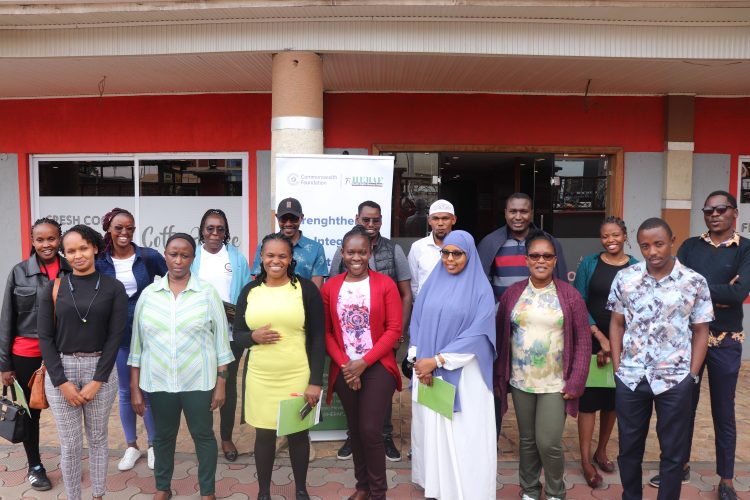
However, stakeholders across the health sector are eager to comprehend the digital health platform that is supporting the management of patient records, services delivery and enhancement of transparency in healthcare. To address this gap, healthcare workers from Makadara Sub-County, Nairobi County were taken through the TaifaCare platform to familiarize them with its features and functionality.

Dr. Somane Hassan the Makadara Sub-County Medical Officer of Health walked the participants through the essential fundamentals of the platform and noted there would be more opportunities for the participants to be trained until they compressively understand the system. The Deputy Health Records and Information Officer for Makadara sub-County provided the participants with a hands-on demonstration. That is, from the sign-into the system and navigation, giving Healthcare workers a practical feel of the platform.

Healthcare workers being taken through the TaifaCare Platform                                                  Healthcare Workers in Makadara being taken through the TaifaCare Platform

Though the platform was highly rated, HCWs voiced concerns about technical glitches that plagued the system. Many felt that the September 15, 2025 deadline for implementation may be a challenge due to the platform’s complexity and the limited time for proper onboarding. Health records officers from Jericho Health Centre, who had already interacted with the system, reported persistent lagging issues. They also raised alarms over the restricted payment options, noting that SHA’s cashless model excluded patients who preferred to pay out-of-pocket, a common practice among many Kenyans.

The most evident miss was the lack of mental health indicators within the platform. While indicators for physical ailments were well represented, mental health reporting was conspicuously absent. This gap is especially troubling given Kenya’s growing mental health crisis and the government’s stated commitment to holistic care. Without proper data capture for mental health cases, the system risks sidelining one of the most urgent and underserved areas of public health. It sends a troubling message that mental health is still not being prioritized, despite years of advocacy and policy promises.

Despite its current challenges, TaifaCare represents a significant step forward in the digitization of health records. Its potential impact on data collection, usage and storage is immense and if implemented thoughtfully it could revolutionize how healthcare is delivered and monitored across the country. The lack of mental health reporting indicators seems as though we have taken one step forward and ten steps back in the fight for mental health recognition. The identified issues and gaps should be escalated to the leadership for readdress to ensure its success.

Despite efforts in improving health outcomes in the past 3 decades, there has been heavy dependence on donor funding especially in financing key developmental health programs predisposing the country to external funding shocks. HIV, TB, Malaria, Maternal and Child Health as well as immunization and vaccination are among the programs that have been entirely reliant on donor funding primarily supported by PEPFAR, USAID and the Global Fund.[1] The immediate unprecedented funding halt by the United States has sent cold chills through Kenya’s health system, with fears of stalled programs, inadequate access to essential services, and a possibility of escalating public health crises. [2] Don’t put your eggs in one basket―well in this case, neither the eggs nor the basket were ours. First, let’s examine how donor funding has influenced different aspects of Kenya’s healthcare sector over the years.

Health Financing in Kenya and Trends in Donor Funding

In the 2024-2025 FY, Kenya has a total budgetary allocation of 9.7% to health with the total contribution from donors ranging from 18 to 26%.  This is contrary to the commitment in the Abuja Declaration of allocating 15%[1] of total government budget to health which is echoed in the Kenya Health Financing strategy 2020-2030 further compounding the crisis.

Over time in the recent past, there has been an evident significant decrease in donor funding and not specifically donor dependency. A contextual analysis of the 2009-2010 FY[2] and 2018-2019 FY[3], shows that donor funding accounted for 35% and 19.1% respectively of Kenya’s health sector financing illustrating a substantial decline in donor contributions over the years. This, however, doesn’t point to a shift from donor dependency to more sustainable financing approaches, rather a reflection on the reduction of financial support provided by the donor leaving gaps for the country’s domestic resourcing which are yet to be filled even as at now.

Courtesy: DW News. ‘US Freezes Almost All Foreign Aid’. Thumbnail image. YouTube, January 25, 2025. https://www.youtube.com/watch?v=JJWJ_p-z7Z4

Underlying and Unprecedented Challenges

The increased vulnerability to major health threats and compromised health security fueled by donor withdrawal stems from several systemic and contextual issues including: The increased vulnerability to major health threats and compromised health security fueled by donor withdrawal stems from several systemic and contextual issues including: 

The sudden halt in donor funding presents Kenya with an opportunity to reimagine its health financing strategy and take a paradigm shift towards more sustainable health financing approaches. The future of Kenya’s health security will heavily depend on its ability to address and counter the systemic challenges and prioritizing more resilient and self-sustaining systems domestically funded.

[1] The Kenya Health Financing Strategy
[2] Reducing Kenya’s health system dependence on donors
[3] The Kenya Health Financing Strategy
[1] Kenya and Global Fund Launch New Grants to Sustain Progress Against AIDS, TB and Malaria[2]https://eastleighvoice.co.ke/usaid/109514/kenya-faces-health-crisis-as-us-halts-vital-aid-to-fight-hiv-malaria

The Social Health Insurance Fund (SHIF) laws were rushed through the legislative process and at one point, they were declared unconstitutional for lack of public participation by the High Court. The greenlight for implementation was granted by the Court of Appeal and the government proceeded to implement the laws. However, lack of clear transition plan for the NHIF staff to SHA has proved to be a major obstacle. The staff need to be assured and motivated to embrace and implement the new scheme without looking behind their backs. Unfortunately, their contracts were extended for a period of six months awaiting SHA to undertake its staff establishment. As they lender services they are awaited by three fates, redeployment to SHA or other public institutions, or retire voluntarily. Why was the rush to rollout a new scheme before undertaking staff establishment? Indeed, this was a huge gabble no wonder the parent Ministry of Health seems to be the driving force behind the SHA. Listening to some high-level ministry officials discussing SHA indicates their comprehension is better as compared to that of SHA board and staff.

The promises and realities of SHA are a contrast. Citizens were mobilized to register and promised rosy services, far better than the ones offered by NHIF. But alas, those that sought services from health facilities were heartbroken. The digital registration, approval and claim process were often faced with technical hitches that took longer than anticipated hindering access to services.  Most of the health facilities including the private sector took longer to be boarded into the scheme due to trust levels as a result of debts owed to them under the defunct NHIF, forcing many patients to pay out of pocket in order to access the services or miss the services all together. In paper the benefit packages under SHIF far outweigh the NHIF’s as they included outpatient care, inpatient care, chronic diseases management, and specialized treatments. However, this came with an increase in contributions at 2.75% of household income.

These patient stories are a call to action. The question of ‘why the rush?’ is now secondary to the question of ‘how do we fix this?’ We must learn from these experiences, engage with communities, and work collaboratively to build a healthcare system that truly serves the needs of all Kenyans. Let’s move forward with a commitment to a complete and effective SHA, not a half-baked idea.

Change is a gradual process, often driven by active community involvement in advocacy, inclusive decision-making, and governance. By participating in activities such as budget planning, monitoring public service delivery, and auditing implementation processes, citizens can foster accountability and transparency among public officers and political leaders. When communities take the initiative to oversee public service delivery and financial management, they encourage leaders at both county and national levels to provide timely and quality services.
Health Rights Advocacy Forum (HERAF), a non-governmental organization focused on transforming health systems through strengthened voice and accountability, identified challenges within the Civil Society Organizations (CSO) network in Masinga and Yatta sub-counties, Machakos County. Over the years of project implementation, the lack of active Community-Based Organizations (CBOs) has limited the effectiveness of advocacy and oversight efforts in these areas. Mapping exercises revealed that while self-help groups, women’s groups, and youth groups were active, no formal CBOs were operational.

To address this gap, HERAF trained leaders of these groups on the Public Benefits Organizations (PBO) Act and County Governments Relations (CGR) Act. The goal was to integrate these smaller groups into structured CBOs at the ward level and connect them to the Machakos County CSO Network (MCCN). This integration aims to enhance community oversight, monitor service delivery, and strengthen engagement with stakeholders in Machakos County.

By supporting the formation and integration of CBOs under the MCCN umbrella, HERAF has facilitated collaboration among CSOs, CBOs, and NGOs. This partnership will boost visibility for community groups advocating for their rights and priorities while fostering social enterprises to address local challenges.

The non-state framework promotes effective information sharing, as the network operates at the sub-county level, with representatives from each village. Members benefit from opportunities to benchmark, participate in training sessions, and build capacity in areas such as budget audits, fundraising, and resource mobilization. This structured approach empowers communities to drive sustainable change and ensure their voices are heard in governance and decision-making processes.

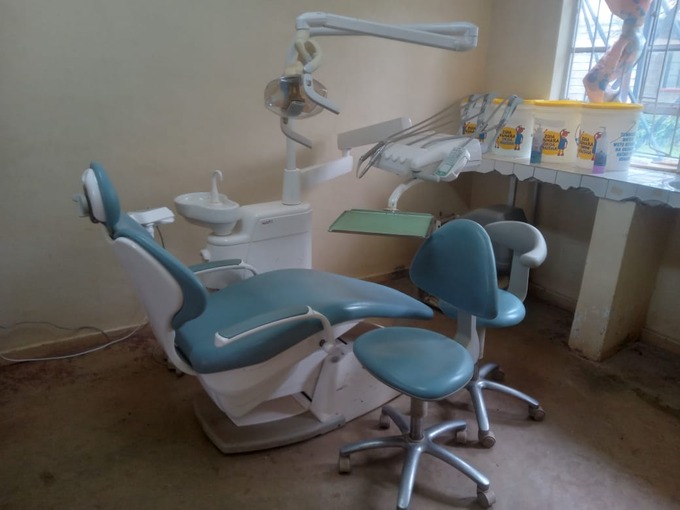
The establishment of the dental unit at Masinga Level 4 Hospital is a testament to the government’s responsiveness to the needs of its constituents. It reflects a collaborative effort between the government and the community. By voicing their concerns and advocating for better access to dental care, the community played a pivotal role in influencing the government to establish the unit. Their voices were heard. The newly equipped Dental Unit at Masinga Level 4 Hospital stands as a beacon of progress, showcasing the tangible outcomes that empowered communities contribute towards better health.